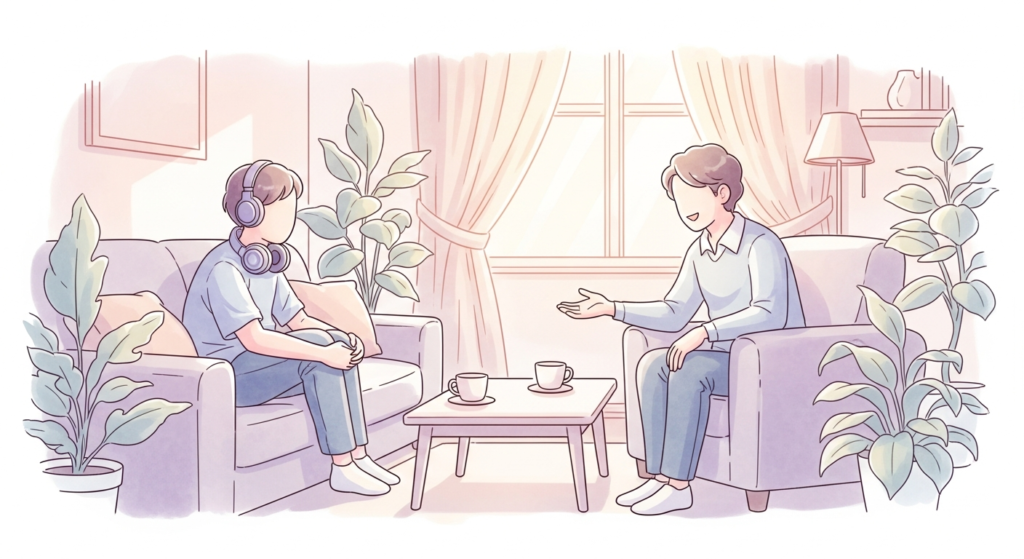
When arguments flare up at home, the child slams the door, and any words turn into a dispute, the question of how to connect with a teenager becomes almost desperate. It feels like you have lost that boy or girl, with whom it was once possible to hug and share your thoughts.
You are not alone in this. Adolescence is a period when even very warm relationships are tested. But contact can not only be maintained; it can actually be gradually restored and made more mature—based on respect, not fear and control.
In this article, we will explore what happens to a teenager, why they “don’t listen,” what common parental reactions break the connection, and what supports it. Most importantly, you will receive specific phrases, techniques, and steps to help build calmer and more vibrant relationships with your teenager.
This material will be useful to you, even if there are many grievances in the family, and you are not sure if your teenager is ready to engage—work can start from where you are now.
Key Takeaways
- The teenage years are a growth crisis, not the “corruption” of a child. Much of what looks like rebellion is actually about self-discovery.
- Contact with a teenager breaks down when a parent reacts only to behavior and does not notice the feelings and needs behind it.
- Closeness is built on respect for boundaries, recognizing the teen’s right to their thoughts, feelings, choices, and mistakes.
- Instead of moralizing and lecturing, questions, interest, acknowledgment of one’s share of responsibility, and the ability to apologize help.
- Conflicts with a teenager are inevitable, but they can be navigated more safely: less shouting, more “I-messages,” and pauses.
- A stable adult nearby is the most important factor in a teenager’s psychological resilience, especially in cases of strong anxiety, burnout, or identity search.
- If the intensity of conflicts is rising, if the teenager is withdrawing, or if you feel emotionally burned out, it makes sense to seek support from a psychologist for the family.
Teenage Developmental Tasks
To understand how to connect with a teenager, it is essential to first see what is happening inside them. Adolescence is not just hormones and sudden mood swings. It’s a significant internal renovation of the personality.
We can conditionally identify several key tasks of teenagers.
| Task | How It Manifests | What Can Help Parents |
|---|---|---|
| Search for identity: “Who am I?” | Experiments with style, views, interests, and social circles. | Don’t ridicule, show interest, ask clarifying questions, give space for exploration. |
| Separation from parents | Disputes, challenging rules, a desire to spend more time away from home. | Maintain contact but acknowledge their right to their opinion and company. |
| Formation of personal boundaries and privacy | Closes the door, does not want accountability for every step, protects their phone. | Don’t intrude without warning, negotiate transparency instead of spying. |
At the same time, teenagers often face:
- increased anxiety about the future (“what to become,” “where to apply”);
- concerns about their appearance;
- first romantic experiences, often accompanied by strong emotions and vulnerability;
- questions of sexual and gender identity, especially if the teenager belongs to the LGBTQ+ community;
- pressure from school, exams, and adult expectations.
It’s important: a teenager is not obliged to “be easy” to earn your love. Their complexity is part of development, not a personal insult to you.
Why Contact Breaks with Teens
Most often, people come to a psychologist with complaints like: “the teenager doesn’t listen,” “doesn’t share anything,” “snaps back at every word.” There can be many reasons behind this.
| Factor | How It Looks | What It Risks for Contact |
|---|---|---|
| Constant criticism and comparisons | “Look at how your sister studies,” “At your age, I…” | The teenager stops sharing to avoid further reproaches. |
| Hyper-control and total supervision | Checking the phone, social media, secretly monitoring messages. | They begin to feel that parents cannot be trusted and that secrecy is necessary. |
| Devaluation of feelings | “It’s nonsense, you’ll fall in love a hundred more times,” “What a problem.” | The teenager learns to hide what is important to them or seeks support only outside the home. |
Sometimes a parent genuinely wants the best but relies on familiar parenting models that they experienced: shouting, shame, threats, punishment through silence. These are familiar, yet quite traumatic tools.
Contact usually breaks not because of a single episode, but due to a repeating dynamic:
- the teenager tries to assert themselves;
- the parent panics and reacts harshly (prohibition, yelling, penalties, control);
- the teenager retreats into protest or a deaf defense;
- the parent “tightens the screws” even more.
Breaking this cycle is difficult but possible. It’s essential to see your role in the system, even if the teenager is not perfect either.
What a Teen Typically Feels
To restore contact with a teenager, it is useful to take a moment to step into their shoes. Not to approve of any behavior, but to better understand what lies behind it.
Common internal experiences of teenagers, which they rarely share with parents:
- “I’m seen as a child, but I’m not little anymore!”;
- “If I tell the truth, I’ll be scolded or shamed.”;
- “My parents won’t understand me; they see things differently.”;
- “I’m ashamed of my feelings/body/desires.”;
- “I have to handle everything myself, or they’ll think I’m weak.”
A separate topic is the experiences of LGBTQ+ teenagers or those questioning their sexual or gender identity. For them, family can either be a support or a source of significant pain.
A phrase that helps a teenager feel seen:
“I may not understand everything, but it’s genuinely important for me to know how you’re experiencing this. I’m on your side, even if I don’t agree with every step.”
What Parents Feel and How It Affects Them
During this period, parents also go through a crisis. Not only is the child changing, but the entire relationship system is transforming. It’s not easy.
In therapy, I often hear:
- “I’m afraid he/she will mess up.”;
- “I tried so hard, and now they talk to me like I’m an enemy.”;
- “I’m ashamed in front of relatives because of my child’s behavior.”;
- “I’m so angry that I don’t even recognize myself.”;
- “I feel like I’ve failed as a parent.”
These feelings are real and deserve respect. However, when they are unrecognized and not taken to a safe space (for example, personal therapy, supportive surroundings), they typically manifest as:
- shouting and threats;
- harsh control out of fear for the child’s safety;
- grievances and “silent punishment”;
- detachment: “since I can’t connect with them, I’ll live my life.”
Contact with a teenager starts when an adult takes responsibility for their reactions: “Yes, I’m scared and hurt, but I don’t have to yell.”
Respect and Boundaries: The Foundation of Contact
Healthy relationships with a teenager rely on two pillars—respect and boundaries. This is something many of us were not taught in childhood but can learn as adults.
| What Respect Means | How It Looks in Communication | How It Supports Contact |
|---|---|---|
| Recognition of the teenager as a separate individual | Listening without interrupting; not ridiculing opinions, even if disagreeing. | The teenager feels their voice is important, so there’s no need to shout to be heard. |
| Respect for personal space and body | Knocking on the door, not reading messages, not touching things without permission. | Basic trust is established: “I am taken into account.” |
| Respect for feelings | Not dismissing what’s important to the teenager; being interested in how they feel about it. | The child seeks support from you more often, not just from peers. |
Boundaries are not only prohibitions but also rules that make life predictable and safe. It is important that they be:
- clearly formulated (without “figure it out yourself”);
- discussable (the teenager can ask questions and suggest options);
- consistent (if a rule exists, it applies not just based on the parent’s mood);
- realistic (considering age, abilities, and real risks).
A supportive formulation:
“It’s important for me that you are safe. Let’s agree on rules that we can both adhere to.”
Communication Skills That Help
The next step in how to connect with a teenager is to develop several basic communication skills. They are not complicated, but they require practice.
- Active Listening. Look at the child when they speak; ask clarifying questions instead of immediately giving advice.
- Reflecting Feelings. Show that you notice emotions: “You seem angry right now,” “It seems you’re upset.”
- I-Messages. Talk about yourself and the consequences, not about how “bad” the teenager is.
- Pausing Before Responding. Give yourself a few seconds to avoid responding in haste.
- Being Able to Acknowledge Mistakes. Apologizing if you were harsh or unfair.
| Skill | Example Phrase | What Changes |
|---|---|---|
| Reflecting Feelings | “It seems you were very angry about this conversation with the teacher.” | The teenager feels that their emotions are legitimate, leading to less resistance. |
| I-Message | “I get worried when I don’t know where you are, and it’s important for me to receive a message from you.” | Less blaming, more understandable motivation for adhering to agreements. |
| Acknowledging Mistakes | “I yelled at you yesterday. I realize that wasn’t right; I’m sorry.” | A model of adult responsibility, trust grows. |
You can tell yourself: “Right now, my task is not to win an argument, but to maintain contact.”
Phrases That Bring Closer or Push Away
A slight change in phrasing can significantly affect how much your teenager hears you. Here are a few examples.
| Pushes Away | Brings Closer | Why It Works |
|---|---|---|
| “You’re always on your phone!” | “I want to spend more time with you. Let’s think about how we can do that, considering both your interests and mine.” | The focus shifts from accusation to the need for closeness and joint problem-solving. |
| “You won’t go anywhere until you fix your grades.” | “I’m concerned about your grades because it affects your future opportunities. Let’s figure out what’s getting in your way and what help could be useful.” | Instead of punishment, it’s a joint analysis and support. |
| “It’s nonsense; everyone has these problems.” | “This seems like a big problem for you. Could you tell me more about what’s hardest?” | Feelings are acknowledged as significant, making it easier for the teenager to open up. |
- “If you want, I’m here and ready to listen, without criticism. You can share as much as you feel comfortable.”
- “It’s important for me to know how you see this situation. Your opinion matters to me.”
Conflicts with a Teen: How to Navigate Disagreements
Conflicts with a teenager do not mean you are bad parents or that your family is “falling apart.” They are part of the separation process. But there are ways to make arguments less destructive.
- Don’t engage in a quarrel at the peak of emotions. If you or the teenager are very heated, it’s better to take a break: “I’m really angry right now and am afraid to say something I might regret. Let’s take a break and come back to this conversation in half an hour.”
- Focus on the essence, not just the form. Behind the shouting, pain, fear, and a sense of injustice often lie feelings. First feelings—then discussion of rules.
- Separate the person from the behavior. “That behavior doesn’t work for me” instead of “You’re horrible.”
- After a conflict, return to contact. A simple “I still love you” or an offer to do something together can help restore the connection.
If conflicts become physically or emotionally dangerous (threats, physical harm, self-harm), it’s important to seek professional help as soon as possible. It’s not “shameful” and does not mean you’ve failed. On the contrary, it’s caring for the safety of all involved.
Support for Self-Definition and Identity
Adolescence is tied to questions like “Who do I want to be?”, “How do I look?”, “Who do I love?”, “What is my gender and sexuality?”. How parents respond can significantly affect whether the teenager feels supported or alone.
What can support them:
- interest in the teenager’s world without interrogation: “Can you tell me what you like about this music/game/community?”;
- willingness to hear what might be unfamiliar to you (including about orientation, gender, views);
- avoiding jokes and comments that mock the body, appearance, or identity;
- recognition of the teenager’s right to doubt and reconsider;
- support for safe experiments with appearance, style, interests, as long as they don’t threaten health and safety.
A supportive phrase when discussing identity:
“You can tell me how you feel and how you define yourself. You don’t need to be something ‘special’ for me to love you.”
Home Rules Without Total Control
A common parental anxiety: if they loosen control, the teenager will “take advantage.” In practice, maintaining consistent contact and having clear, discussed rules works better than rigid prohibitions.
Several principles that can help:
- Joint Discussion. It’s important not just to announce rules, but also to listen to the teenager: what is realistic for them, what they disagree with, and why.
- Transparency of Consequences. It’s better to agree in advance on what happens if a rule is broken and stick to those agreements.
- Consideration of Age and Context. Curfew, use of gadgets, pocket money—all these can gradually change as they grow older.
- Flexibility. Sometimes rules should be reviewed if life changes: a new school, extracurricular activities, declining well-being.
| Situation | Controlling Approach | Contractual Approach |
|---|---|---|
| Curfew | “You’ll be home by 9, or you won’t go anywhere else.” | “It’s important for me that you’re safe. For weekdays, I suggest until 9, how do you feel about that? What’s feasible for you?” |
| Gadgets before bed | “I’ll take your phone after 10. Period.” | “I read that sleep is important for health. Let’s try to agree on a time when you put your phone away so it’s easier to wake up in the morning.” |
Common Parental Mistakes and How to Avoid Them
Some reactions particularly often undermine relationships with teenagers, even when parents act out of the best intentions.
- “Running” conversations and only about tasks. If communication reduces to “Did you do your homework? What about chores?”, the teenager stops seeing you as a person with whom they can talk about important things.
- Devaluing difficulties. “What problems do you have? People have wars/poverty” does not help cope, but adds guilt and loneliness.
- Sarcasm and shaming. “Of course, we’re raising a genius,” “Don’t embarrass me” undermine self-esteem and trust.
- Breaking agreements. “I promised, but I changed my mind” without explanations destroys the sense of security.
- Trying to become a “friend” while ignoring the parental role. Teenagers still need adult boundaries and support.
How to support relationships instead:
- spend at least a small but regular time on a shared activity where school and chores don’t need to be discussed;
- notice and acknowledge the teenager’s strengths, not just their mistakes;
- honestly admit if you don’t know how to react and seek information or help together;
- ensure that criticism targets actions, not the person.
Supportive phrase for yourself:
“I can make mistakes as a parent and still be a good enough adult for my child. I’m learning alongside them.”
Self-Help for Parents: How to Handle Stress
To maintain contact with a teenager, it’s important for parents not to burn out and disappear from their own lives. This is not selfishness but an aspect of caring for the family.
Several areas to consider:
- Your own feelings. Notice where you feel particularly hurt or scared: issues about studying, body image, questions of orientation, substance use. These points are often connected with your experiences, and you can work on them in personal therapy.
- Resources. Small regular sources of recovery: walks, conversations with adults, hobbies, sleep.
- Support. People with whom you can talk about your parenting without judgment.
- Boundaries. Understanding where your responsibility ends and the teenager’s choice begins.
A simple practice you can use when you feel “boiling over” in a conflict:
- notice bodily signals (tension in the jaw, rapid heartbeat, heat);
- take 3–5 slow breaths, slightly lengthening the exhale;
- internally name: “I’m angry” or “I’m scared”;
- say out loud: “I need a couple of minutes to calm down, then we’ll continue” and leave the room;
- return to the conversation when you feel you can speak without shouting.
When to Seek Help from a Psychologist
Sometimes, despite efforts, it’s challenging to resolve conflicts with a teenager independently. This doesn’t mean you are “bad” parents or have a “problematic” child. The system simply needs external support.
It makes sense to consult a specialist if:
- the conflicts in the family have become daily and volatile;
- the teenager has changed dramatically (is withdrawn, stopped communicating, abandoned usual activities, expresses thoughts of life’s futility or self-harm)—in such cases, it’s especially important not to delay seeking help;
- you and your partner have significantly different parenting styles and can’t agree;
- there are topics you fear discussing with the teenager (orientation, gender, sexuality, substance use, self-harm);
- you feel a strong sense of burnout, irritability, helplessness yourself.
In consultations on parent-child relationships, we usually:
- analyze what is happening in your family right now, without seeking “guilty parties”;
- explore which of your reactions support the conflicts, and which can become a support;
- learn new ways to communicate, negotiate, and withstand tension;
- gradually restore the feeling that you and the teenager are on the same team, even if you see many things differently.
Sometimes the teenager gets involved in the process, and sometimes we work for a while solely with the parent—that depends on the situation and the child’s readiness.
Frequently Asked Questions
What should I do if my teenager doesn’t talk to me at all?
Start with small steps: short neutral remarks (“good morning,” “how are you?”), offers to do something together without pressure. It’s important to remove interrogation and criticism if you want the connection to gradually recover. Sometimes it’s helpful to say directly: “I see you don’t want to talk to me. I respect that and will still be here. If you ever want to share, I’m ready to listen.” If silence lasts for months and is accompanied by sharp changes in behavior, it’s worth consulting a specialist.
How should I react if my teenager is rude and raises their voice?
Try not to respond in kind. You can calmly set boundaries: “When I’m yelled at, it’s hard for me to continue the conversation. I’m ready to discuss this when we can both talk more calmly.” It’s important to return to the topic later, not pretend nothing happened. It’s helpful to separate emotions from behavior: acknowledge the teenager’s anger but don’t agree with the insults.
Should I monitor my teenager’s messages and social media?
Total secret control often destroys trust. It’s better to negotiate safety principles: who can meet in person, what to do if someone behaves threateningly or sends unsolicited intimate materials. You can explain that you’re concerned about safety and discuss what forms of transparency would be acceptable for both of you. In cases of real threats to life and health, of course, the adult’s responsibility is greater, but even then, it’s important to be as transparent in your actions as possible.
What should I do if my teenager refuses to see a psychologist?
Don’t force them. Give the teenager information about what a psychologist does, dispel myths (“it’s not about ‘fixing’ me, but about support”). You can suggest one trial meeting: “If you don’t like it, we won’t continue.” Meanwhile, you can start working on your own—changing the parent’s reaction already influences the family atmosphere and sometimes over time makes the teenager more open to the idea of therapy.
How to talk to a teenager about harmful habits and risks?
It’s important not to scare them or moralize but to provide real information and discuss together. You can say: “I want you to be safe. I know many at your age try alcohol/smoking/other substances. Let’s talk about the risks involved and how you can take care of yourself.” The goal is not to create an illusion of full control but to foster the teenager’s internal support and understanding of the consequences.
How to support a teenager if they are LGBTQ+ or questioning their orientation/gender?
The key is to convey that love and acceptance do not depend on orientation or gender. Avoid jokes and phrases like “this will pass,” “you just have too much time on your hands.” It’s better to say: “Thank you for trusting me with this. It’s probably not easy. I may not know everything, but I’m willing to learn and be on your side.” When necessary, you can seek a psychologist who is respectful of LGBTQ+ issues and can help all family members navigate this phase.
What should I do if my teenager spends all their time on gadgets?
The goal is not to deprive them of gadgets but to find balance. Try to understand what exactly the teenager is gaining in online spaces: communication, recognition, relaxation. Discuss how you can allocate time so that there is room for sleep, study, and offline activities. It’s important to offer alternatives rather than just “taking away” the gadgets and to demonstrate healthy engagement with devices yourself.
How to respond to sharp mood swings in a teenager?
Mood swings are a common part of adolescence. You can gently reflect: “I see that you are feeling very upset/angry right now,” without demanding “calm down immediately.” At the same time, it is essential to monitor the duration and intensity of the state: if feelings of depression, hopelessness, or thoughts of death persist for weeks, or if self-harm appears, it is necessary to consult a specialist.
How to maintain authority if I acknowledge my mistakes to my teenager?
Acknowledging mistakes does not undermine authority; it makes it more mature. Teenagers are very sensitive to discrepancies between adults’ words and actions. When a parent can say, “I was wrong, I’m sorry,” it shows that the adult is taking responsibility rather than shifting the blame onto the child. Such authority usually garners more respect than a rigid stance of “I’m always right.”
Sources and Useful Materials
This text draws on contemporary understandings of adolescent development and parent-child relationships, including materials from major professional organizations:
- World Health Organization (WHO) – general information on adolescent mental health: who.int
- American Psychological Association (APA) – section on adolescent psychology and family therapy: apa.org
- International Classification of Diseases ICD-11 (ICD-11) – approaches to classifying mental disorders, including in adolescence: icd.who.int
- National Institute of Mental Health (NIMH) – materials on depression, anxiety, and suicidal thoughts in teenagers: nimh.nih.gov
This material is for informational purposes only and does not replace personal consultation with a psychologist. If the situation is severe or there is a risk to oneself, it’s important to seek assistance from a specialist. If you or your teenager are struggling right now, please try not to stay alone and reach out for urgent support from doctors, psychologists, or emergency services in your area as needed.
{“@context”:”https://schema.org”,”@type”:”FAQPage”,”mainEntity”:[{“@type”:”Question”,”name”:”What should I do if my teenager doesn’t talk to me at all?”,”acceptedAnswer”:{“@type”:”Answer”,”text”:”Start with small steps: short neutral remarks (“good morning”, “how are you?”), offers to do something together without pressure. It’s important to remove interrogation and criticism if you want the connection to gradually recover. Sometimes it’s helpful to say directly: “I see you don’t want to talk to me. I respect that and will still be here. If you ever want to share, I’m ready to listen.” If silence lasts for months and is accompanied by sharp changes in behavior, it’s worth consulting a specialist.”}},{“@type”:”Question”,”name”:”How should I react if my teenager is rude and raises their voice?”,”acceptedAnswer”:{“@type”:”Answer”,”text”:”Try not to respond in kind. You can calmly set boundaries: “When I’m yelled at, it’s hard for me to continue the conversation. I’m ready to discuss this when we can both talk more calmly.” It’s important to return to the topic later, not pretend nothing happened. It’s helpful to separate emotions from behavior: acknowledge the teenager’s anger but don’t agree with the insults.”}},{“@type”:”Question”,”name”:”Should I monitor my teenager’s messages and social media?”,”acceptedAnswer”:{“@type”:”Answer”,”text”:”Total secret control often destroys trust. It’s better to negotiate safety principles: who can meet in person, what to do if someone behaves threateningly or sends unsolicited intimate materials. You can explain that you’re concerned about safety and discuss what forms of transparency would be acceptable for both of you. In cases of real threats to life and health, of course, the adult’s responsibility is greater, but even then, it’s important to be as transparent in your actions as possible.”}},{“@type”:”Question”,”name”:”What should I do if my teenager refuses to see a psychologist?”,”acceptedAnswer”:{“@type”:”Answer”,”text”:”Don’t force them. Give the teenager information about what a psychologist does, dispel myths (“it’s not about ‘fixing’ me, but about support”). You can suggest one trial meeting: “If you don’t like it, we won’t continue.” Meanwhile, you can start working on your own—changing the parent’s reaction already influences the family atmosphere and sometimes over time makes the teenager more open to the idea of therapy.”}},{“@type”:”Question”,”name”:”How to talk to a teenager about harmful habits and risks?”,”acceptedAnswer”:{“@type”:”Answer”,”text”:”It’s important not to scare them or moralize but to provide real information and discuss together. You can say: “I want you to be safe. I know many at your age try alcohol/smoking/other substances. Let’s talk about the risks involved and how you can take care of yourself.” The goal is not to create an illusion of full control but to foster the teenager’s internal support and understanding of the consequences.”}},{“@type”:”Question”,”name”:”How to support a teenager if they are LGBTQ+ or questioning their orientation/gender?”,”acceptedAnswer”:{“@type”:”Answer”,”text”:”The key is to convey that love and acceptance do not depend on orientation or gender. Avoid jokes and phrases like “this will pass”, “you just have too much time on your hands.” It’s better to say: “Thank you for trusting me with this. It’s probably not easy. I may not know everything, but I’m willing to learn and be on your side.” When necessary, you can seek a psychologist who is respectful of LGBTQ+ issues and can help all family members navigate this phase.”}},{“@type”:”Question”,”name”:”What should I do if my teenager spends all their time on gadgets?”,”acceptedAnswer”:{“@type”:”Answer”,”text”:”The goal is not to deprive them of gadgets but to find balance. Try to understand what exactly the teenager is gaining in online spaces: communication, recognition, relaxation. Discuss how you can allocate time so that there is room for sleep, study, and offline activities. It’s important to offer alternatives rather than just “taking away” the gadgets and to demonstrate healthy engagement with devices yourself.”}},{“@type”:”Question”,”name”:”How to respond to sharp mood swings in a teenager?”,”acceptedAnswer”:{“@type”:”Answer”,”text”:”Mood swings are a common part of adolescence. You can gently reflect: “I see that you are feeling very upset/angry right now”, without demanding “calm down immediately”. At the same time, it is essential to monitor the duration and intensity of the state: if feelings of depression, hopelessness, or thoughts of death persist for weeks, or if self-harm appears, it is necessary to consult a specialist.”}},{“@type”:”Question”,”name”:”How to maintain authority if I acknowledge my mistakes to my teenager?”,”acceptedAnswer”:{“@type”:”Answer”,”text”:”Acknowledging mistakes does not undermine authority; it makes it more mature. Teenagers are very sensitive to discrepancies between adults’ words and actions. When a parent can say, “I was wrong, I’m sorry,” it shows that the adult is taking responsibility rather than shifting the blame onto the child. Such authority usually garners more respect than a rigid stance of “I’m always right.””}}]}